



How to develop a comprehensive Workforce Strategy in 2025
In the rapidly changing economy of today, companies need to remain flexible, competitive, and adaptable. An effective workforce plan is therefore one of the most important resources for achieving these objectives. In fact, a comprehensive workforce strategy includes succession planning, employee engagement, talent planning, and skill development, as well as hiring. Moreover, creating a workforce strategy that supports long-term business goals is essential, whether you’re managing a growing company or leading an HR team.
In this blog, we’ll explore the key steps in developing a workforce strategy, best practices, and why it’s crucial for sustainable success. Redolent, Inc is a leading company providing various talent management solutions, including but not limited to contingent workforce services, managed workforce services, talent acquisition services and demand-driven screening services.
What is a workforce strategy?
A long-term plan that makes sure that a business has the right people in the right jobs at the right times with the right capabilities is called a workforce strategy.
It increases performance, agility, and growth by coordinating HR operations with business objectives. Planning the workforce, hiring, managing employees, managing performance, training, and developing leadership are all part of it. A workforce strategy consists of forecasting and actively planning for future workforce requirements.
Why is a workforce strategy important?
Creating an effective workforce strategy is essential for the following reasons:
- Future-proofing the business: Companies require skilled, flexible employees as markets and technologies shift.
- Making sure HR initiatives are connected to business priorities is known as aligning talent with business goals.
- Reducing hiring costs and turnover: A strategic approach to workforce management reduces recruitment costs and increases retention.
- Increasing productivity: higher performance and job satisfaction result from placing the right people in the right roles.
- Promoting Diversity, Equity, and Inclusion: Integrating DEI into corporate culture is made possible by strategic planning.
Step-by-Step process to build a comprehensive workforce strategy
1. Set up business objectives and match HR goals: Understanding the vision, mission, and strategic goals of your company is the first step in creating a workforce strategy. Executives and HR leaders must collaborate to understand:
- Future developments in goods or services
- Plans for entering the market
- Investments in technology
- Growth projections
Next, establish HR goals that directly support these once they are clear. For example, HR needs to get ready to hire people from around the world and additionally facilitate cross-cultural training because a business plans on entering international markets.
2. Evaluate your current team: you should assess your workforce’s current situation before making any plans for the future. Conduct a thorough workforce analysis that consists of:
- Headcount by location, role, and department
- Demographics (age, gender, tenure, etc.)
- Rates of turnover
- Levels of employee engagement
Find any gaps between your present workforce and your future requirements using this data. Workforce trends can be visualized and forecast with the help of tools such as HR analytics software.
3. Conduct a skills gap analysis: to find out what skills your workforce is lacking, both now and in the future, a skills gap analysis is essential. Here’s how to do it:
- List the skills that the company needs now and in the future.
- Assess the skill sets of current employees using tests, performance evaluations, or self-assessment.
- Find the gaps and figure out the most important areas first.
This insight allows you to plan targeted learning and development initiatives and make informed hiring decisions.
4. Forecast future workforce needs: Predicting the number and type of employees you’ll need to meet future business demands is known as workforce forecasting. Consider regarding:
- Plans for expansion or changes to the market
- Forecasts for retirement
- Trends in turnover
- New positions created by technology (e.g., AI, data science)
For more accurate forecasts, link qualitative techniques (such as expert judgment) with quantitative models (such as trend analysis and situation planning).
5. Develop talent acquisition and retention strategies: The foundation of any workforce strategy is recruitment and retention. Make a plan based on your projections and analysis that consists of:
– Recruitment:
- Employer branding strategies
- Diversity-oriented procurement
- AI and HR technology use in hiring
- Recruitment on campus and internship programs
– Retentions:
- Competitive pay and benefits
- Paths for career development
- Programs for employee wellness
- Effective mentorship and onboarding programs
Retaining top talent is more cost-effective than recruiting new employees.
6. Build a Learning and Development (L&D) Plan: Continuous learning becomes expected as technology evolves. Develop an L&D program specifically designed to deal with future capabilities and skills gaps. Pay attention to:
- Development of Leadership
- Training and upskilling
- Partnerships for training and certifications
- Training in emotional intelligence and soft skills
Create a culture of growth by utilizing internal mentoring programs, workshops, and e-learning platforms.
7. Incorporate diversity, equity & inclusion (DEI): A strategic workforce strategy should place DEI at the center. Diverse workforces are more productive, innovative, and resilient. DEI initiatives should involve:
- Inclusive hiring practices
- Pay equity audits
- Employee resource groups (ERGs)
- Bias training for managers
- Transparent policies and reporting processes
Monitor DEI metrics so that your strategy creates measurable progress.
8. Develop succession and leadership plans: Leadership continuity is important to achieve long-term success. Identify critical positions and create succession plans for them. Steps involve:
- Identifying high-potential employees
- Creating career paths for emerging leaders
- Offering stretch assignments and coaching
- Building a talent pipeline
Succession planning increases internal motivation and lowers the chance of disruption when leaders leave.
9. Integrate technology into workforce management: automation and data power modern workforce strategies. Leverage technology to improve:
- Talent analytics
- Monitoring employee engagement
- AI-powered recruiting
- Planning and modeling of the workforce
- Performance management systems
HR technology facilitates better decision-making and unleashes the power of strategic thinking.
10. Monitor, measure, and adjust the strategy: Planning your workforce is a continuous process. For the strategy to remain effective, it needs to be frequently reviewed and improved on the basis of:
- The state of the market
- Changes in business
- Employee views
- Performance metrics
Utilize key performance indicators (KPIs) like turnover rate, time to hire, training ROI, and engagement scores. Conduct quarterly reviews and adjust your strategy based on what’s going right — and what’s not.
Common challenges in Workforce Strategy (and how to overcome them)
1. Resistance to Change: Most employees and managers are reluctant to implement new workforce strategies because they fear the unknown or an interference with existing processes.
Solution: Clearly communicate the benefits, engage key stakeholders at an early stage, and promote a culture of openness to create trust and acceptance.
2. Lack of Data: In the absence of proper and timely workforce data, strategic decisions become guesswork instead of insight-based.
Solution: Invest in trusted HR analytics solutions and set regular data collection practices to inform planning and measure success.
3. Limited Budget or Resources: Cost and resource limitations may hamper the rollout of a complete workforce strategy.
Solution: Prioritize high-impact, low-cost activities first, and implement a phased approach to incrementally roll out the strategy over time.
4. Misalignment with business: When HR initiatives operate in isolation, they often miss the mark in supporting broader company objectives.
Solution: Make sure workforce planning is directly in line with business growth and transformation objectives by incorporating HR into strategic discussions.
Conclusion:
An effective workforce strategy keeps your company flexible in an economy that is changing quickly while helping in attracting, cultivating, and maintaining top talent. It’s a long-term investment in your people, who are your most valuable resource. You can create a workforce that is prepared for the opportunities and challenges that are ahead by coordinating human resources efforts with business goals and consistently improving your strategy.
Start by asking, where do we want to go and who do we need to get there? From there, the strategy will take shape, one step at a time.
Talk to us today to know more about our talent management solutions, including but not limited to contingent workforce services, managed workforce services, talent acquisition services, and demand-driven screening services. Reach out to us today at:https://redolentech.com/reach-out-to-us/
Beyond AI Pilots: Why Enterprise AI Needs Infrastructure
August 3, 2026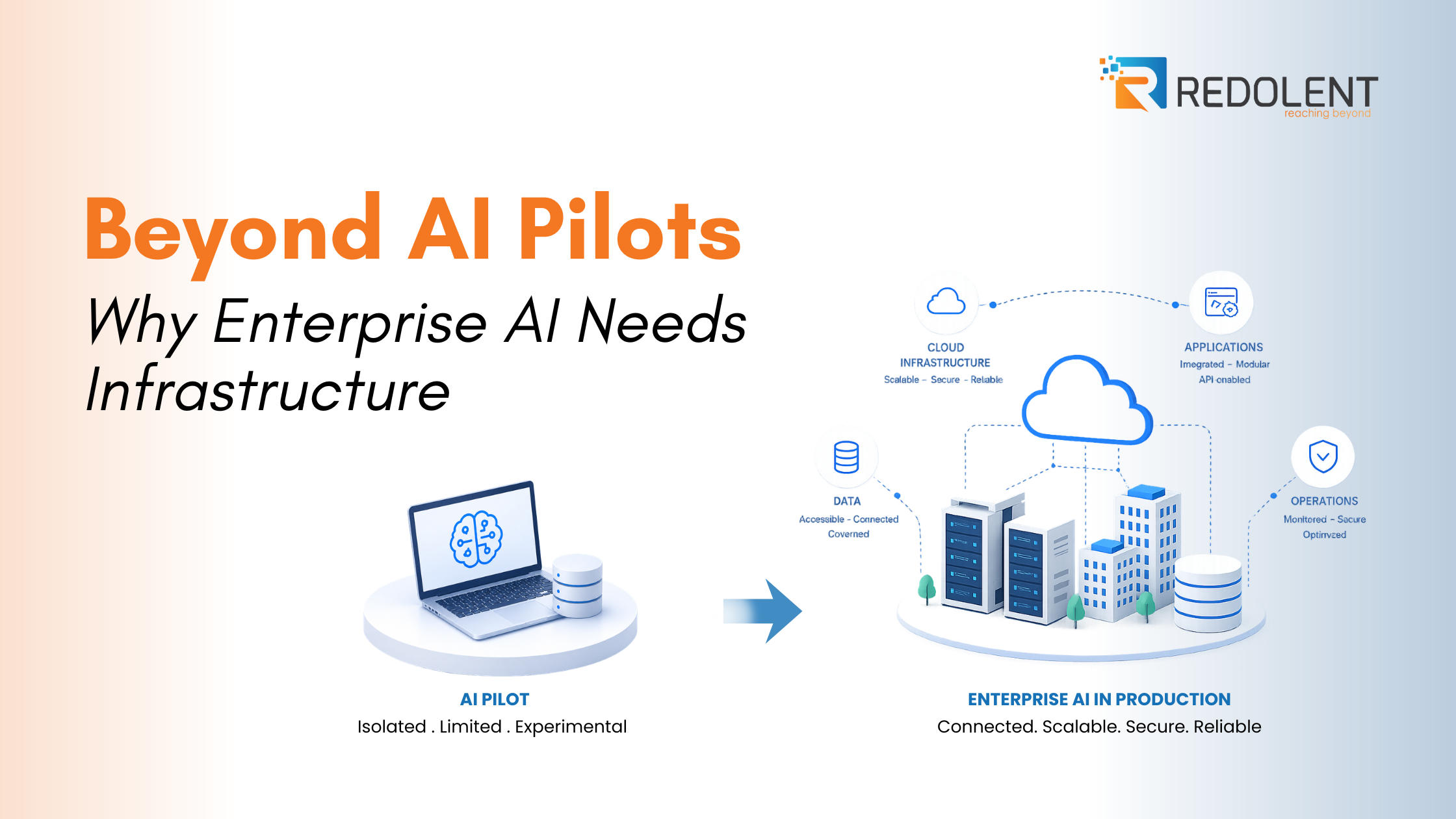
The Cost of Legacy Systems: Impact on Business Growth
April 9, 2026