



Predictive Hiring: Building High-Performing Teams
One of the most important decisions an organization can make is hiring the right individual. However, how many times do we hire someone who appears ideal on their resume only to find out that their performance falls below expectations? In reality, this is a problem that many organizations deal with. Traditionally, hiring practices mostly rely on resumes, instincts, and assumptions about a candidate’s prior experiences. However, today’s workforce is evolving more rapidly than in the past, and as a result, companies must hire more carefully.
To address this challenge, predictive hiring is introduced as a more intelligent, data-driven strategy that helps companies identify candidates who are most likely to be successful. Instead of guessing, predictive hiring employs advanced data analysis to provide an answer to one essential question: “What is the probability that this candidate will succeed in this role?”
Redolent, Inc is a leading company providing various talent management solutions, including but not limited to contingent workforce services, managed workforce services, talent acquisition services and demand-driven screening services.
In this blog, we explore predictive hiring in simple terms, highlight its advantages, and demonstrate how Redolent, Inc. assists businesses in shifting from instinctive hiring to AI-driven, data-backed recruitment.
What Is Predictive Hiring?
Using past employee performance information, predictive hiring creates a “success profile” for each job. Use it as a guide to what makes someone successful in a specific role. Predictive analytics finds patterns in behavior, skills, and experience that forecast long-term performance instead of relying on resumes or instincts.
The difference is clear to see:
- Old way: “This candidate seems like a fit; they have a strong degree.”
- Predictive method: “Candidates with this behavioral profile exceed others in similar roles and have an 85% higher retention rate,” based on data.
The Core Factors of Predictive Hiring
- Hard skills and knowledge (k): These are the technical abilities, qualifications, and training required to carry out the work. Candidates who have the necessary expertise reduce training time, start making contributions right away, and speed up the results of the project.
- Cognitive ability (c): This includes flexibility, learning capacity, and problem-solving skills. Strong cognitive abilities allow candidates to deal with difficult situations, adjust to shifting business requirements, and set up fresh processes more quickly.
- Qualities of personality and behavior (p): Long-term success depends on behavioral characteristics like communication style, teamwork, and resilience.
It’s easier to make sure a candidate will fit in with your team culture if you know how they handle challenges and interact with others.
- Experience/career trajectory (e): Assesses how a candidate’s prior employment history, development, and achievements match with success in the position.
This lowers the risk of early turnover by showing whether a candidate is likely to continue developing and contributing over time.
All of these factors work together to build an in-depth analysis of a candidate’s potential, enabling hiring teams to make data-driven decisions instead of uncertain choices.
How Smart Hiring Works
A systematic yet efficient process creates a predictive fit score based on a resume:
- Making a success profile: The system looks for patterns in your top performers’ data. It identifies the traits and actions that lead to success.
- Who regularly scores goals?
- Who remains long-term
- What qualities or actions are associated with success?
Businesses can determine what defines “success” for each position by examining these patterns. This ensures that upcoming hires meet the needs of the company.
- Using AI to analyze candidates: Predictive hiring systems use sophisticated algorithms and Natural Language Processing (NLP) to read between the lines. They look at:
- Career growth rate, a sign of ambition and learning agility
- The ability to quickly master related skills can be seen by skill adjacency.
- Behavioral talents like resilience, leadership, and teamwork
This analysis goes beyond keywords to find hidden insights that are frequently missed by traditional recruiting approaches.
- Fit score calculation: The system creates a fit score by comparing each candidate to the success profile. This score is used by recruiters to objectively rank applicants based on how likely they are to succeed in the position.
A higher Fit Score helps organizations avoid expensive mistakes in hiring by indicating a candidate’s probability of long-term success in addition to their skills.
Benefits of Predictive Hiring
Predictive hiring actions bring measurable benefits in several areas:
- Better hiring quality: Employers hire workers who produce results by focusing on qualities that lead to actual performance. This results in increased output, fewer errors, and a team that can accomplish corporate objectives more quickly.
- Reduced unconscious bias: Human recruiters may accidentally provide favor to applicants based on their background, gender, or age. Only elements that are directly related to the position are evaluated by predictive hiring models. This approach ensures that candidates are evaluated according to their actual potential, promotes diversity, and makes the hiring process fairer.
- Increased retention rates: Employers can make better hiring decisions right away by using predictive analytics to identify early warning signs of employee resignation. Employers may reduce expensive replacement cycles and keep valuable talent for longer by hiring candidates who better fit their company culture and role expectations.
- Quicker and more flexible hiring: HR teams can fill positions more quickly by simplifying recruitment processes through data-driven decisions. Scalable systems enable companies to expand teams effectively without affecting candidate experience or quality.
Challenges and Ethical Considerations
Despite the potential benefits of predictive hiring, companies need to be aware of the following risks:
- Algorithmic bias: If biased data is used, predictive models may unintentionally duplicate previous hiring mistakes, which is why regular surveillance and audits are essential.
- A human in the loop: AI should support human judgment, not take its place. Algorithms cannot match the empathy, understanding of culture, and context that recruiters offer. Better decisions are made overall when AI insights are combined with human judgment.
- Data privacy: Sensitive candidate data is analyzed by predictive hiring. Companies need to be transparent about how they use data and comply with privacy laws like the CCPA and GDPR. This protects your business legally and builds trust
Real-World impact of predictive hiring
- Improved performance: Predictive analytics-qualified candidates consistently exceed their traditional hiring counterparts.
- Reduced turnover: Retention rates increase when candidates are hired based on their cultural and behavioral fit.
- Improved diversity: Data-driven hiring reduces the impact of personal bias in the evaluation of candidates.
- Cost savings: Improving hiring quality and lowering turnover have a direct effect on the bottom line.
Example:
Walmart leveraged predictive analytics and machine learning models on its historical hiring and performance data. By redesigning their recruitment process with data-driven insights, the company was able to improve hiring speed and retention. Industry reports note a 40% reduction in time-to-hire and a 20% improvement in employee retention following this shift.
Why Redolent, Inc. is at the top of predictive hiring
Redolent, Inc. is a trusted partner for workforce management and AI-driven talent acquisition. Among their solutions are:
- Managed and contingent workforce services
- Demand-driven screening and talent acquisition
- Workforce success through predictive analytics
Redolent’s strategy ensures that:
- AI models that are audit-ready
- alignment with the objectives of the organization
- Operations for scalable talent
Organizations can move from casual hiring to data-backed hiring by collaborating with Redolent, creating more robust and reliable teams.
The Future of Smart Hiring
The days of the “resume lottery” are coming to an end. Companies that solely rely on instinct experience the risk of losing their top talent and having to pay for incorrect hiring decisions. The future lies in predictive hiring:
- Precision hiring: Data-driven insights assist in choosing applicants who are a good fit for the position
- Scalable hiring: Quickly fill several positions without losing quality
- Agile workforce: Confidently adjust to shifting business requirements
By providing tailored predictive hiring systems, increasing retention, lowering bias, and enhancing workforce quality, Redolent, Inc. helps companies in embracing this future.
Are you prepared to make the change? Redolent, Inc. specializes in developing and putting into practice customized, audit-ready AI-driven talent acquisition solutions that turn your hiring procedure from a risk into an expertise. Together, we can make sure your prediction model is equitable, efficient, and completely in line with your growth plans.
Talk to us today to know more about our talent management solutions, including but not limited to contingent workforce services, managed workforce services, talent acquisition services, and demand-driven screening services. Reach out to us today at:https://redolentech.com/reach-out-to-us/
Beyond AI Pilots: Why Enterprise AI Needs Infrastructure
August 3, 2026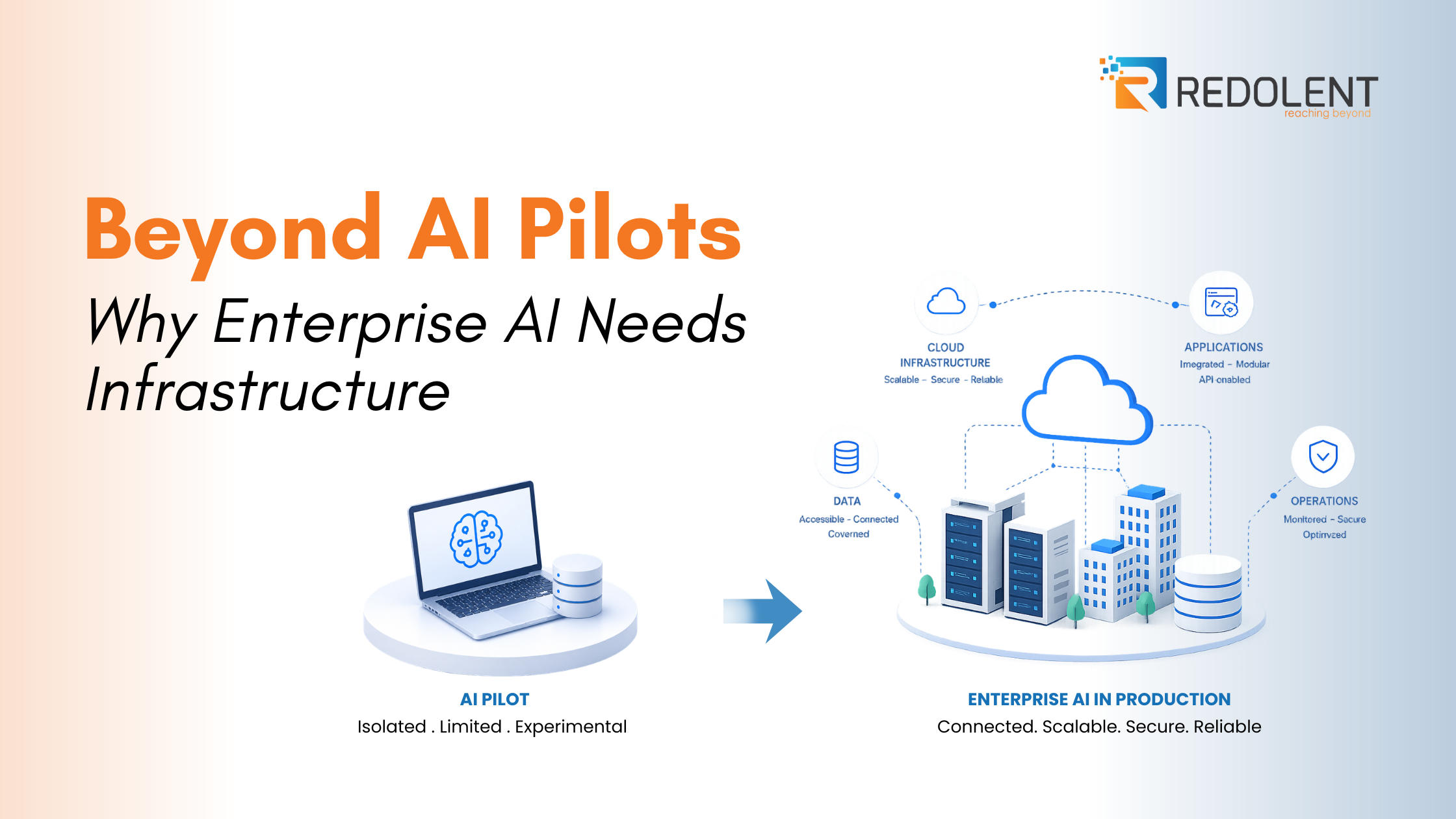
The Cost of Legacy Systems: Impact on Business Growth
April 9, 2026