



The Cost of Legacy Systems: Impact on Business Growth
The cost of legacy systems is becoming a growing concern for businesses across industries. Many organizations still rely on older systems to manage their daily operations because these systems have been in place for years and continue to function. However, the role of technology in business has changed significantly. Systems today are expected to support faster execution, better customer experience, and real-time decision-making.
When older systems are unable to meet these expectations, they begin to affect performance, increase operational costs, and slow down growth. The cost of legacy systems is no longer limited to maintenance. It directly influences how efficiently a business operates and how well it can compete in a fast-changing market.
In this blog, we explore the cost of legacy systems and how outdated technology impacts business performance, efficiency, and long-term growth. We examine how legacy environments affect IT budgets, slow down execution, and create challenges in scalability and innovation. The blog also highlights key industry insights, real data points, and practical considerations for organizations looking to modernize their systems.
Redolent, Inc. is a leading company providing Digital transformation solutions, including but not limited to cloud engineering services & application development services. Let’s explore its foundational features and the amazing ways it facilitates change in the real world.
Cost of legacy systems on IT budgets
One of the most noticeable effects of legacy system costs is their impact on IT budgets. A large portion of IT spending is used to maintain existing systems instead of improving them or investing in new capabilities.
Industry data shows that organizations spend approximately 60% to 80% of their IT budgets maintaining legacy systems, which leaves limited room for innovation and digital transformation. This creates a situation where businesses are focused more on keeping systems running rather than improving them.
As a result, companies often struggle to adopt modern tools or technologies that could improve efficiency and productivity. Over time, this limits progress and reduces the ability to compete effectively.
Impact on Business Execution Speed
The cost of legacy systems is not just financial. It also affects how quickly a business can operate and respond to change. Modern businesses need to release updates quickly, adapt to customer demands, and respond to market changes. Legacy systems make this difficult because they are complex and tightly connected. Even small updates can take longer to implement due to dependencies, testing requirements, and system limitations.
According to McKinsey, technical debt can reduce development speed by 20% to 40%, which directly affects time-to-market. When execution slows down, businesses miss opportunities and struggle to keep up with competitors.
Effect on innovation and engineering productivity
Another important aspect of the cost of legacy systems is its impact on innovation. Technical teams often spend a significant amount of time maintaining existing systems instead of building new solutions.
Maintaining legacy systems involves handling bugs, fixing issues, and managing outdated code. This reduces the time available for innovation and product development. As more effort goes into maintenance, the ability to introduce new features or improve existing services decreases. This directly affects business growth and slows down progress over time.
Increasing maintenance effort over time
The cost of legacy systems continues to rise as systems age. Older technologies require specialized skills, regular updates, and ongoing monitoring. In many organizations, maintaining legacy systems becomes more expensive over time without delivering significant improvements in performance. This creates a situation where businesses are spending more money just to maintain existing operations. As costs increase, companies face greater pressure to optimize their systems and reduce unnecessary expenses.
Challenges in scaling business operations
The cost of legacy systems also affects scalability. As businesses grow, they need systems that can handle more users, more data, and more integrations. Legacy systems are often not designed for this level of flexibility. Integrating them with modern tools or cloud platforms can be complex and time-consuming. This makes it harder for businesses to scale operations efficiently and take advantage of new opportunities. As a result, growth becomes slower and more difficult to manage.
Downtime and operational disruptions
Legacy systems are more likely to experience failures and downtime due to their complexity and outdated infrastructure. According to Gartner, the average cost of IT downtime is approximately $5,600 per minute, depending on the size and nature of the business. This adds to the overall cost of legacy systems by creating financial losses, operational disruptions, and reduced customer trust. Frequent downtime can also damage a company’s reputation and affect long-term relationships with customers.
Security risks and data protection challenges
Security is a major factor in the cost of legacy systems. Older systems are harder to secure because they are not built to meet modern cybersecurity standards. IBM reports that the average cost of a data breach is $4.45 million, highlighting the financial impact of security risks.
Legacy systems often lack advanced security features, making them more vulnerable to attacks. This increases the risk of data breaches and compliance issues, which can have serious consequences for businesses.
Technical debt and long-term constraints
Technical debt is one of the most important factors contributing to the cost of legacy systems. Over time, outdated systems become harder to manage and more expensive to update. McKinsey estimates that technical debt can represent 20% to 40% of the value of a company’s technology estate. This shows how much impact outdated systems can have on overall business performance.
As technical debt increases, businesses find it harder to adopt new technologies, improve systems, and respond to changing market conditions.
Conclusion:
The cost of legacy systems goes far beyond maintenance. It impacts IT budgets, slows down execution, limits innovation, and creates challenges in scaling operations. Businesses that continue to rely on outdated systems often face increasing inefficiencies and higher long-term costs. Organizations that invest in modernization are better positioned to improve performance, reduce operational complexity, and support long-term growth.
At Redolent, Inc., we work with enterprises to modernize legacy environments through digital transformation, automation, and cloud-driven strategies tailored to business goals. If your systems are slowing down your growth or increasing operational costs, it’s time to take action.
Beyond AI Pilots: Why Enterprise AI Needs Infrastructure
August 3, 2026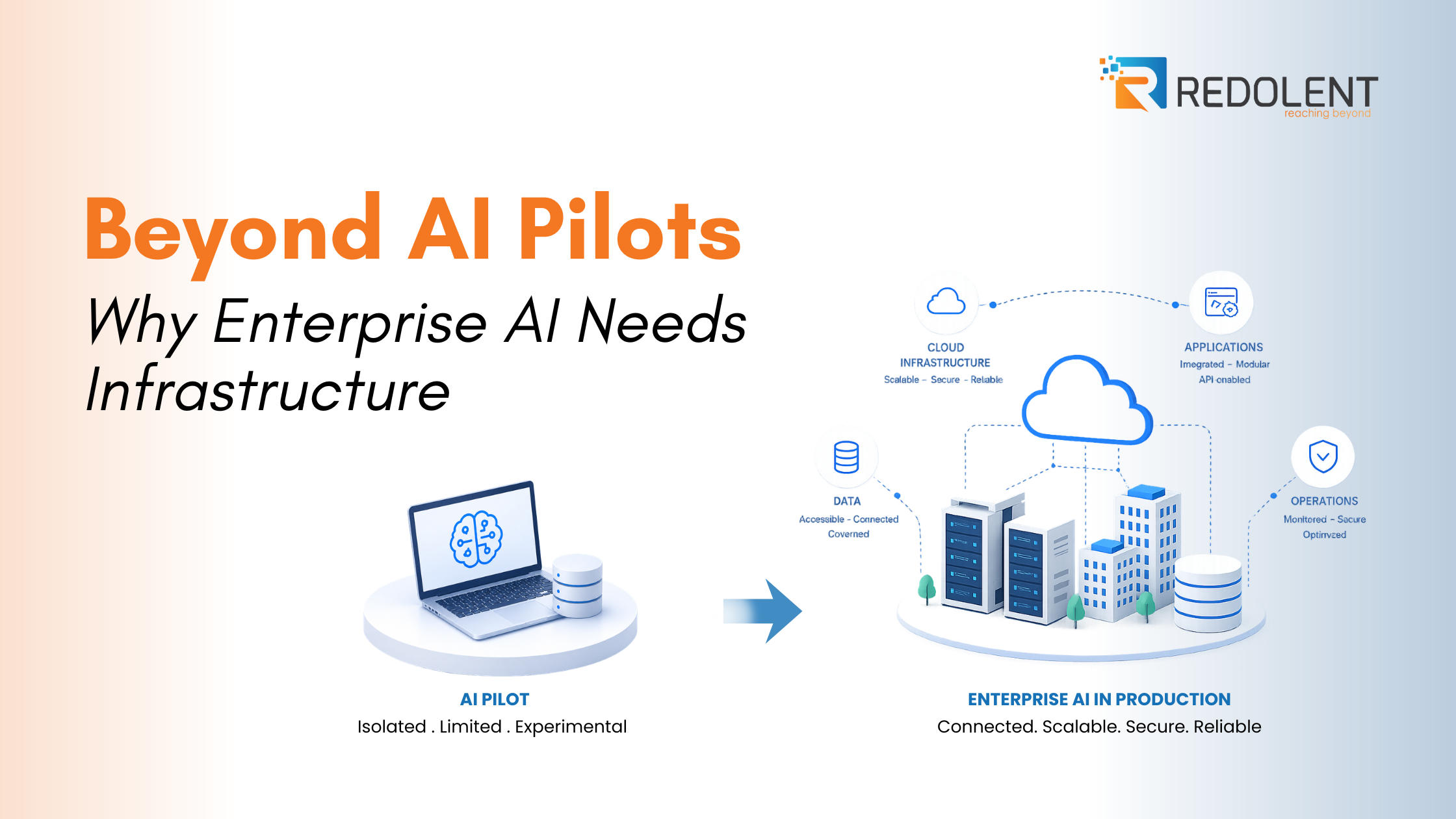
The Cost of Legacy Systems: Impact on Business Growth
April 9, 2026