



How Generative AI is Revolutionizing Enterprise Talent Acquisition
One of the most important tasks for any company is talent acquisition (TA), which is the process of finding, attracting, and employing the best candidates. However, traditionally, it has also been difficult, repetitive, and subject to human biases. Nowadays, generative AI (GenAI) has brought about an important shift in the way large organisations find, evaluate, and recruit talent.
In this blog, we’ll explore how generative AI is transforming company talent acquisition, why it is more important than ever, the actual benefits it offers, and the challenges that organisations face. We also explore important trends, insights generated by data, and helpful advice for TA teams.
Redolent, Inc. is a leading company providing Digital transformation solutions, including but not limited to cloud engineering services & application development services. Let’s explore its foundational features and the amazing ways it facilitates change in the real world.
Why Generative AI matters for Talent Acquisition
For recruiters, generative AI (such as conversational agents and large language models) is no longer just a “nice-to-have.” Organisations are using it more and more to do more than simply automate repetitive tasks; they are reconsidering how they find and evaluate talent. The following explains why GenAI is revolutionising talent acquisition:
- Scale plus personalisation: AI has the ability to manage massive candidate outreach numbers while customising messages for specific candidates.
- Efficiency and speed: Job descriptions, interview scheduling, and resume screening can all be completed in a couple of minutes.
- Data-driven choices: AI can help recruiters make more informed choices by identifying trends in candidate data (skills, experience, and cultural fit).
- Cost savings: organisations lower their hiring time and expenses by automating repetitive tasks.
- Better candidate experience: Conversational AI and chatbots ensure candidates feel heard and offer 24/7 engagement.
- Fairer hiring: With careful planning and supervision, generative AI can help reduce unconscious bias.
Key trends in Generative AI and enterprise hiring
It’s useful to look at current developments and what experts expect for the near future, for the purpose of understanding how generative AI is influencing talent acquisition.
1. Quick adoption in all organisations
- 99% of hiring managers already implement AI into their hiring process, according to InsightGlobal’s 2025 Hiring Survey.
- According to Second Talent’s research, 67% of companies are currently using AI in hiring.
- Large businesses are leading the way in the adoption of AI recruiting tools.
This broad adoption illustrates how generative AI has progressed from being experimental to becoming an essential component of many large organisations’ hiring processes.
2. Cost and Efficiency Gains
- According to a survey by InsightGlobal, 98% of hiring managers reported that AI significantly increased their efficiency in screening, scheduling, and assessment.
- Organisations are reporting 25% faster time-to-hire and up to 30% lower cost-per-hire, according to AllAboutAI.
- According to WiFiTalents data, 63% of recruiters automate repetitive tasks with AI.
Recruiters can concentrate on more strategic tasks like building relationships with candidates or enhancing employer branding because these efficiency gains free up their time.
3. Talent intelligence & proactive sourcing
- “Talent intelligence-driven sourcing” is recognised as a major shift in Deloitte’s 2025 TA trends report. By evaluating data from both internal and external sources, AI now helps recruiters in actively reaching out to interested applicants.
- Before a job is even posted, generative AI can figure out possible candidates by analysing large data sets (social media, past hires, industry profiles).
In summary, recruiters are now exploring ahead with AI intelligence instead of waiting for candidates.
4. Improved experience for candidates
- Candidates can interact in real time with GenAI-powered chatbots by scheduling interviews, asking questions, and receiving feedback. This reduces drop-offs and increases responsiveness.
- A report (Draups / similar) claims that generative AI can use natural language to create more interesting job descriptions, making positions clearer and appealing to applicants.
Additionally, AI can create screening questions that are customised for particular roles, which improves suitable evaluation.
5. Focus on bias mitigation and ethical use
- Though AI is quick, bias and fairness are major concerns. Recent academic work indicates that generative models can maintain gender bias in hiring if not carefully audited.
- Compliance is becoming more important. For example, organisations must make sure their AI hiring tools are transparent and fair in view of the EU AI Act’s coming adoption.
- Adoption of generative AI is also linked with an increase in demand for higher-order skills; jobs that use GenAI frequently require more social and cognitive abilities.
6. Integration and the evolution of the talent stack
- Organisations no longer see AI in hiring as an additional expense. Rather, they are incorporating chatbots, LLMs, and predictive tools into their main CRM and ATS (Applicant Tracking System) systems.
- A popular instance is the acquisition of Paradox, a conversational AI recruitment platform, by Workday, a significant HR software provider, in order to create a more seamless AI-powered talent acquisition suite.
- Hiring teams are increasingly using AI copilots—tools that assist in generating job descriptions, evaluating candidate data, and even suggesting interview questions as a consequence of this kind of integration.
7. Human-AI hybrid hiring models
- Even with the broad adoption of AI, human judgment is still essential. According to 93% of hiring managers surveyed by InsightGlobal, human involvement is still important.
- This hybrid model finds a balance between human nuance, empathy, and awareness of context and the speed and scale of AI.
- Some companies are also changing their style of interviews; in order to evaluate real skills, recruiters are creating more structured, competency-based interviews because candidates may use AI to prepare.
Important use cases: the application of Generative AI in business Talent Acquisition
1. Creation of job descriptions
- Utilising information from previous jobs, necessary skills, and market research, AI creates initial job descriptions.
- To increase candidate attraction, it can modify these descriptions for various platforms (such as LinkedIn versus the company website).
2. Screening and shortlisting resumes
- Resumes are scanned and evaluated by LLMs or multi-agent AI frameworks, which compare candidate experience to job requirements.
- AI also helps recruiters quickly reduce the pool by summarising resumes, highlighting important skills, and identifying warning signs.
3. Chatbots and candidate engagement
- Intelligent AI, or chatbots, interacts with applicants 24/7 by responding to frequently asked questions, helping them with the application process, and setting up interviews.
- This enhances the applicant experience, especially for shift-based or high-volume hiring positions.
- Additionally, chatbots free recruiters of the need for manual follow-ups.
4. Designing interviews and creating questions
- Generative AI can create structured interviews or suggest customised screening questions.
- It can help assess technical or soft skills by simulating interview situations or role-based evaluations.
5. Talent intelligence & predictive matching
- To find passive candidates, AI algorithms examine both external data (LinkedIn, GitHub) and internal databases (past hires, performance reviews).
- Based on data-driven models, it can forecast which candidates have the highest chances of success or long-term retention.
6. Simulations for onboarding and assessment
- For the purpose of evaluating candidates, generative AI helps in the creation of actual tests, role-playing games, and interactive simulations.
- Recruiters can more dynamically evaluate a candidate’s decision-making, problem-solving, and cultural fit with these simulations.
7. Fairness audits and bias monitoring
- Companies audit hiring models for bias (gender, race, background) using AI.
- They perform “bias-checks” on feedback processes, candidate scoring patterns, and generated content.
- To ensure that decisions are transparent, AI tools sometimes use “fairness filters” or transparent AI features.
Generative AI’s advantages for Enterprise Talent Acquisition
The main benefits that companies usually experience when they use generative AI in hiring are as follows:
- Faster hiring cycles: Interviews, scheduling, and screening are all streamlined.
- Reduced expenses: Recruiters save time and money by automating repetitive tasks.
- Better hiring quality: Predictive matching helps in locating more suitable applicants.
- Improved employer brand: Throughout the hiring process, candidates experience increased engagement and support.
- Scalability: AI manages large hiring quantities without corresponding increases in staff.
- Reduced bias (potentially): AI can reduce human bias and encourage more equitable hiring practices when used properly.
- Improved strategic focus: Recruiters can shift their attention from routine work to long-term talent pipelines, employer value propositions, and relationship-building.
Risks and Challenges: What Could Go Wrong (and How to Mitigate)
Although generative AI has significant potential, it is not a universal solution. Organisations must be aware of several risks and difficulties and take action to mitigate them.
1. Fairness and bias
Gender, race, educational, and background biases may be hidden in the historical data that generative AI models use to learn. These biases may unintentionally come up in screening or shortlisting decisions if they fail to keep updated. Organizations should use bias-detection tools, conduct regular audits, and select AI systems that provide clear justifications for their choices to lower this risk. This maintains hiring’s fairness, accountability, and transparency.
2. Issues with Candidate Trust and Transparency
A lot of applicants are still worried about being assessed by AI. According to surveys, very few people have faith in hiring decisions made by AI. Candidates may feel unfairly judged or treated impersonally if there is a lack of clarity. By being transparent about the use of AI in the hiring process, outlining the reasons behind the use of specific tools, and making sure that human recruiters review significant choices, organizations can avoid this. This balance fosters confidence and trust.
3. Pressures from Regulation and Compliance
organizations must adhere to more strict rules regarding the use of AI in hiring, such as the EU AI Act. Legal problems or reputational harm can arise from noncompliance. Organizations require strong governance, which includes conducting risk assessments, examining data privacy policies, and making sure all AI tools adhere to legal and ethical requirements. Both the organization and the candidates are protected by this proactive strategy.
4. An excessive dependence on AI and a loss of human judgment
Teams that depend too much on AI risk missing crucial human indications like empathy, communication style, or cultural fit—qualities that AI fails to completely assess. This may make the hiring process less effective and lead to a bad fit. The most effective strategy is a hybrid one that combines human sense with AI efficiency. To ensure fairness and a good candidate experience, recruiters should always keep an eye on important decision points.
5. Candidate Overwhelm, Integration, and Skill Gaps
Integrating new AI tools with older technologies like ATS, CRM, and HRIS platforms is a common challenge for organizations. However, candidates may feel overwhelmed if AI-generated communication seems excessive or generic, and HR teams may lack the expertise needed to use AI effectively. Companies should invest in technical integration planning, give HR teams continuous AI training, and make sure all AI-generated content is reviewed by humans for accuracy and personalization in order to address these problems.
What to expect in 2026 and beyond
1. AI as a true Copilot for HR managers
By 2026, generative AI will work less like a stand-alone tool and more as a smart copilot. AI will be used by recruiters to provide real-time recommendations, insights, and administrative assistance. AI will assist humans in making better decisions, reducing manual labour, and working more quickly rather than taking their place. Recruiters will spend more time to strategy, building relationships, and evaluating cultural fit—tasks that AI fails to perform.
2. Talent pipelines that are more intelligent and predictive
Building proactive and long-term talent pipelines will be greatly helped by generative AI. AI will forecast future hiring needs by analysing talent gaps, career advancement opportunities, and skill trends rather than waiting for applications. By implementing this change, organisations will be able to improve their relationships with talent long before a position becomes available and avoid the pressure of last-minute hiring.
3. The development of responsible and explainable AI systems
Businesses will require hiring tools that provide a clear explanation of a candidate’s shortlisting or rejection. Both new regulatory requirements and ethical concerns are driving this push for transparency. Fairness checks, bias-reporting dashboards, and “explainability” will be given top priority by AI vendors. TA teams will feel more comfortable utilising AI for important hiring choices as a result.
4. Increased advancement in skills-based hiring
Organisations will increasingly hire for skills rather than degrees or job titles as automation and GenAI transform job roles. Higher cognitive, problem-solving, and interpersonal skills are already needed for jobs involving AI, according to research.
With AI assisting in the analysis of skill patterns in resumes, portfolios, and assessments, this trend is going to pick up speed in 2026, making hiring more inclusive and prepared for the future.
5. Advanced virtual simulations and international hiring growth
Recruiters will be able to assess candidates’ problem-solving, teamwork, and communication skills in real work environments. At the same time, as AI assists in analysing local talent markets, languages, and cultural data, remote and international hiring will increase. Organisations will feel more comfortable hiring internationally because of AI-driven insights.
Top techniques for enterprises using Generative AI for hiring
1. Start with focused pilot projects
Starting small is the best way to integrate generative AI into talent acquisition. Companies should test AI tools for job descriptions, chatbot engagement, or resume screening in one field, such as campus hiring or high-volume roles. Pilot testing minimises risk, facilitates team learning, and ensures that the technology is in line with actual hiring requirements before expanding.
2. Create a strong cross-functional implementation group
Collaboration between TA, HR operations, legal, compliance, IT, and data science is necessary for the successful adoption of AI. From understanding hiring procedures to protecting data privacy and assessing technical performance, each group contributes essential expertise. Implementation is safer, easier, and more in line with organisational objectives due to this cross-functional approach.
3. Establish clear KPIs and regularly assess impact
Before using any AI tool, organizations should set measurable goals. These could include speeding up the hiring process, reducing the cost per hire, boosting diversity outcomes, or improving candidate satisfaction. Teams can better understand what is working, what needs to be improved, and whether the tool is providing real business value by measuring results both before and after deployment.
4. Give transparency, justice, and ethical use top priority.
The use of AI in hiring must be recognised by both candidates and employees. Being transparent about the role of AI promotes ethical hiring and builds trust. Organisations should use transparent tools, conduct frequent bias audits, and make sure that recommendations made by AI are reviewed by humans. Creating an internal AI ethics framework reduces risks and improves accountability.
5. Train your TA teams and make continuous improvements
To fully understand how AI tools function, evaluate AI outputs, and integrate them with human judgment, recruiters must receive the necessary training. Teams maintain flexibility through ongoing learning. After launching AI systems, enterprises should collect feedback from recruiters and candidates, then refine workflows accordingly. Maintaining compliance and long-term success will be supported by keeping an eye on the regulatory environment and integrating AI with current HR systems.
Conclusion:
Generative AI is transforming how enterprises attract and hire talent, making the process faster, more cost-effective, and far more customised. AI will continue to influence hiring as companies enter 2026 with more intelligent, moral, and human-centred solutions.
However, success depends on more than adopting new tools. It requires strong governance, fairness checks, and balanced human oversight. Organisations that take a planned approach to AI will not only enhance their process for hiring but also improve their long-term ability to develop and retain talent.
At Redolent, we are passionate about providing comprehensive solutions that deliver measurable value and impact, aligning with the ever-changing demands of your business. Our dedicated team offers exceptional support and assistance, ensuring excellence and accelerating your success. Talk to us today to know more about our Digital transformations solutions, including, but not limited to, cloud engineering services & application development services.
Reach out to us today at https://redolentech.com/reach-out-to-us/ to learn more about how we can help you achieve your goals.
Beyond AI Pilots: Why Enterprise AI Needs Infrastructure
August 3, 2026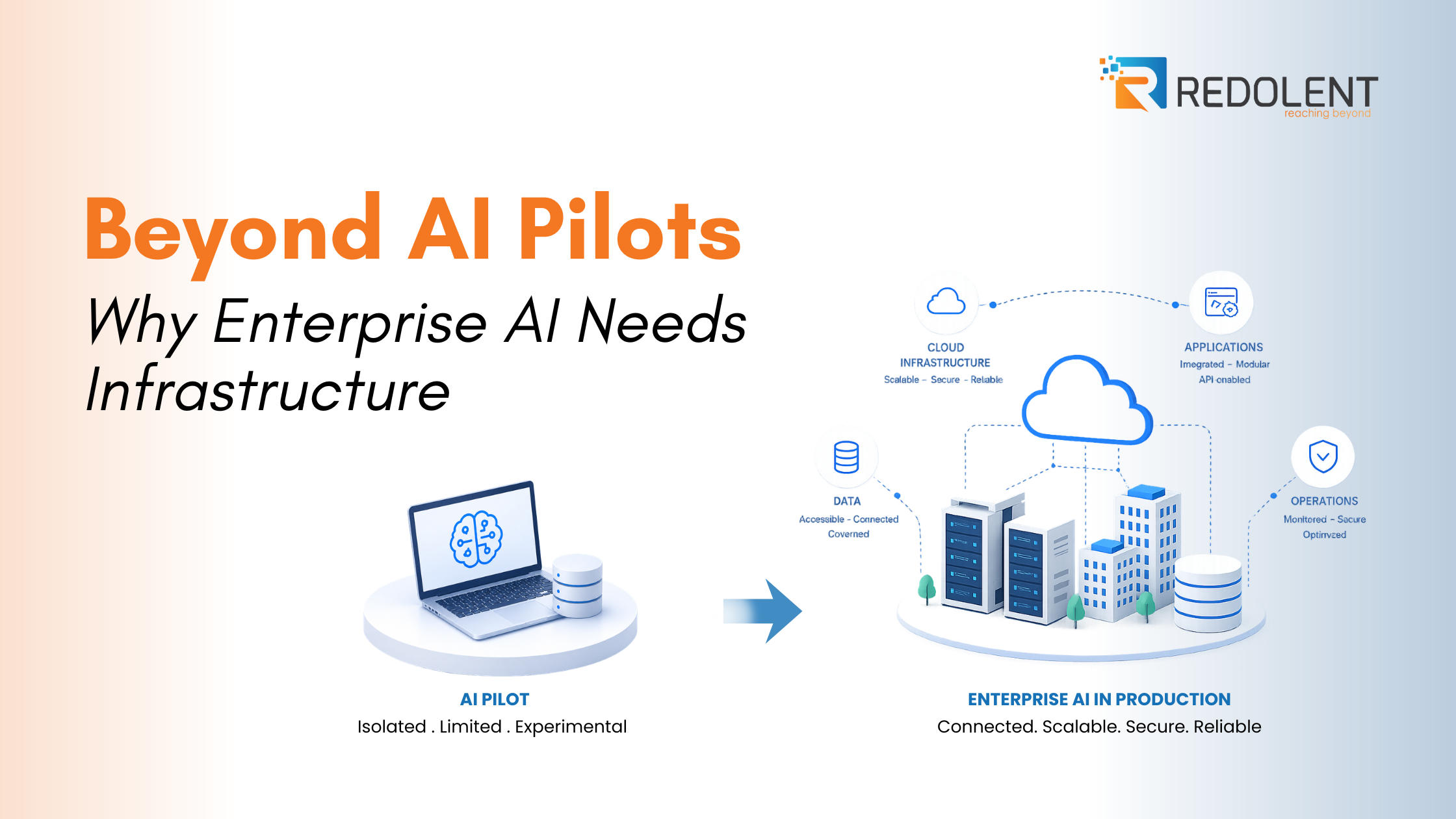
The Cost of Legacy Systems: Impact on Business Growth
April 9, 2026