



The Strategic Role of EORs in Contingent Workforce Transformation
The business landscape nowadays is drastically changing. The traditional approach of having permanent, office-based employees is no longer essential for organizations. Instead, organizations are increasingly adopting the contingent workforce, which is not only a dynamic mix of consultants, temporary employees, contractors, and freelancers but also a model that ultimately provides the agility and flexibility businesses need to stay competitive. Yet handling this workforce at scale involves complexities: cross-border compliance, worker classification, payroll, benefits, and legal risk. This is where the Employer of Record (EORs) model is revolutionizing the game.
By serving as the legal employer for an organization, EORs allow businesses to hire and engage contingent workers by geography without the administrative weight of establishing entities or dealing with foreign employment legislation.
Redolent, Inc is a leading company providing various talent management solutions, including but not limited to contingent workforce services, managed workforce services, talent acquisition services and demand-driven screening services. This blog explores the ways in which EORs are a strategic force behind contingent workforce transformation, defining agility, compliance, worker experience, and global scalability.
Why the contingent workforce is growing
Organizations across sectors are more dependent on contingent workers for:
- Flexibility: to scale up or down rapidly as per the needs of the project.
- Specialized skills: to tap into expertise in niche areas without commitments.
- Cost efficiency: moreover, organizations benefit from lower overheads compared to permanent staff and therefore achieve a more sustainable workforce model.
- Global reach: to access talent pools globally.
Based on studies by Staffing Industry Analysts, contingent workers already constitute over 35% of the workforce worldwide, and this trend is expected to continue to grow steadily. For organizations, the issue is not merely where to find talent but how to manage it effectively around the globe.
What is an employer of record (EOR)?
An Employer of Record (EORs) is a third-party provider who becomes the record employer of an employee on behalf of a client enterprise. Although the client maintains control over day-to-day tasks and work results, the EOR is responsible for:
- Employment agreements
- Payroll and tax administration
- Benefits administration
- Adherence to local labor laws
- Risk management and insurance
This brings consistency and stability to contingent workers. It brings a scalable and compliant solution for global talent management to organizations.
The strategic role of EORs in contingent workforce transformation
1. Accelerating speed to market
Time-to-hire is vital in a high-velocity economy. In the absence of an EOR, firms have to navigate local regulations, establish legal entities, and implement payroll systems steps that can be months in the making.
EORs reduce this timeline by several orders of magnitude. By drawing on their existing infrastructure, organizations can bring contingent workers on board in days. This speed to market enables businesses to:
- Launch pilot projects rapidly.
- Respond to unexpected market changes.
- Enter new markets at full speed.
Agility is a competitive edge in today’s competitive landscape, and EORs facilitate this.
2. Maintaining compliance across borders
Compliance continues to be one of the largest risks in contingent workforce management. Misclassifying employees as contractors, violating labor laws, or mismanaging payroll taxes can cost companies significant fines, lawsuits, and reputation harm.
EORs take complete responsibility for compliance by:
- Properly classifying workers.
- Complying with local labor laws.
- Processing tax and social security liabilities.
- Issuing compliant contracts.
This evolution turns a disorganized, high-risk contractor program into an organized, compliant, and audit-prepared system.
3. Saving costs while promoting efficiency
Some companies at first sight perceive EOR services as an extra cost. But the expense of non-compliance, setting up legal entities, or inefficient management of contractors is much more expensive.
EORs save companies money by:
- Removing the requirement for entity setup in new geographies.
- Lowering legal and administrative overhead.
- Rolling up payroll and HR functions into a single provider.
- Avoiding penalties for misclassification or compliance violations.
The outcome is a streamlined, cost-saving contingent workforce model in alignment with long-term business strategy.
4. Augmenting the worker experience
One of the underserved areas of contingent workforce management is the contingent worker’s experience. Freelancers and contractors tend to feel isolated from company culture and, in some cases, lack access to a stable benefits package.
EORs enhance the contingent worker experience by:
- Providing employment contract that are legally compliant.
- Providing benefits like health coverage, retirement contributions, and paid time off (depending on the location).
- Ensuring on-time payroll with no delay.
- Establishing clear points of contact for HR-related inquiries.
This enhanced experience increases employee loyalty, engagement, and productivity, and makes contingent talent more committed to organizational success.
5. Facilitating global workforce scalability
Global growth is no longer a big-company strategy. Startups and mid-sized companies are increasingly sourcing talent from around the world. But the administrative hurdles of establishing operations overseas can hinder growth.
EORs allow companies to scale globally by:
- Enabling access to new geographies without the requirement for entity establishment.
- Granting a single partner to oversee multiple geographies.
- Allowing for scalability to increase or decrease the workforce according to market needs.
This makes contingent workforce programs borderless ecosystems, enabling businesses to grow strategically without added overhead.
Why EORs are key to the future of workforce transformation
EORs are more than service providers; they are strategic facilitators. Their value goes beyond compliance and payroll to reframing the way organizations approach workforce strategy.
- From reactive to proactive hiring: rather than rushing to establish compliance frameworks, companies can concentrate on strategic workforce planning.
- From local to global talent pools: access to global contingent talent becomes feasible and cost-effective.
- From transactional to transformational HR: administrative tasks are outsourced so HR teams can concentrate on people strategy and culture.
The real value of EORs is in facilitating business transformation via workforce transformation.
Best practices for harnessing EORs in contingent workforce programs
- Determine clear goals – are you looking for international expansion, cost reduction, or compliance risk mitigation?
- Select the appropriate EOR partner – seek out providers with expertise in your desired regions and industries.
- Embed EOR within workforce strategy – use the EOR as a long-term partner, rather than a short-term fix.
- Prioritize worker engagement – make sure your EOR offers benefits and services that improve the contingent worker experience.
- Monitor and optimize – regularly review EOR performance to ensure it reflects changing business needs.
Conclusion
As the contingent workforce expands, companies need to reimagine traditional workforce models. Employers of Record (EORs) are not simply administrative partners; they are agents of change. From streamlining global hiring to compliance, enhancing worker experience, and scaling strategically, EORs lead the charge on workforce innovation.
For organizations that want to succeed in an increasingly dynamic business landscape, working with an EOR is not a tactical decision; it’s a strategic necessity.
Talk to us today to know more about our talent management solutions, including but not limited to contingent workforce services, managed workforce services, talent acquisition services, and demand-driven screening services. Reach out to us today at:https://redolentech.com/reach-out-to-us/
Beyond AI Pilots: Why Enterprise AI Needs Infrastructure
August 3, 2026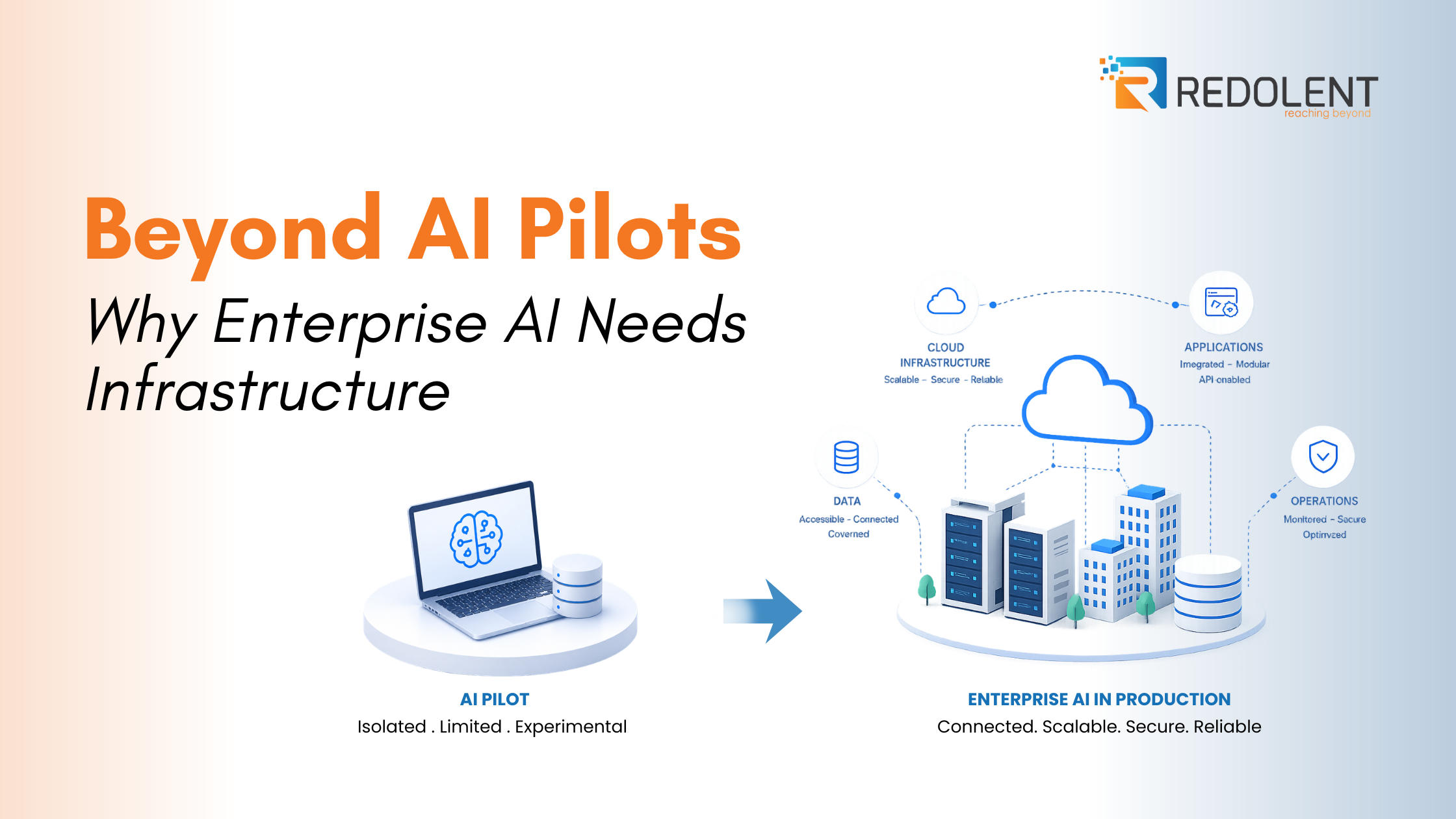
The Cost of Legacy Systems: Impact on Business Growth
April 9, 2026